
Strengthening the Gut Barrier Through Diet
Meet Akkermansia: Your Gut’s Guardian
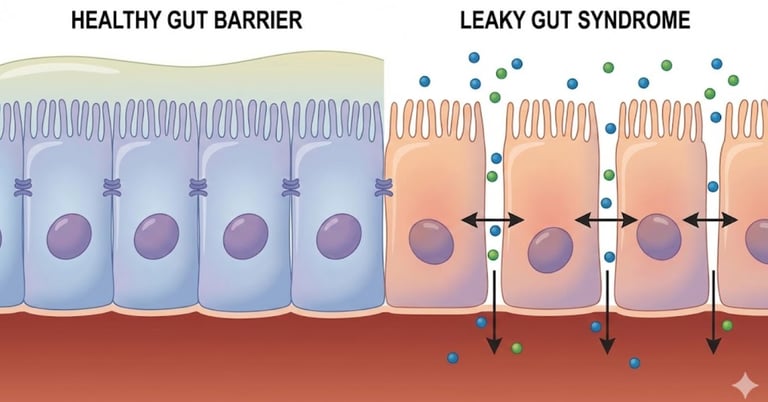
Akkermansia is one of the key good bacteria that helps protect the lining of your gut. You can think of it as a bodyguard for your intestinal wall. When Akkermansia levels drop, the gut lining can get thin and leaky — a condition often called “leaky gut.” Even though you can’t eat foods that contain Akkermansia, you can choose foods that feed it and help it grow naturally. The truth is that many people are deficient in this all-important gut bacteria and, in essence, need to 'kick-start' their levels by means of a a high-quality, oxygen-protected supplement. That is the only way to reintroduce the live strain into the ecosystem.
When the gut barrier weakens, harmful substances like LPS (lipopolysaccharides) can slip into your bloodstream, causing inflammation and other health issues.
Why Diet Is So Important
Your gut lining is one of the busiest tissues in your body — it completely renews itself every 3 to 5 days. That means what you eat directly shapes your gut health.
A healthy diet works like medicine in two ways:
It stops the things that damage your gut barrier.
It gives your body the nutrients it needs to build it back up.
Foods That Help Akkermansia Thrive*
Polyphenol-Rich Foods
Polyphenols are plant nutrients that act like fuel for Akkermansia.
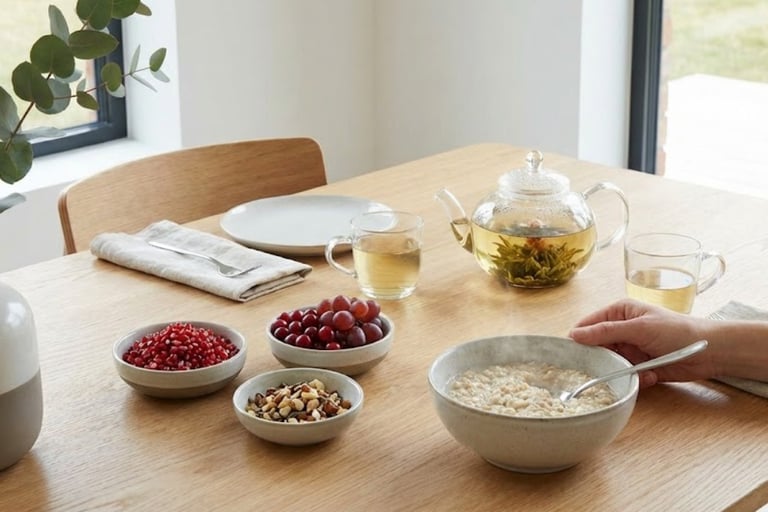
Fruits: Blueberries, cranberries, raspberries, pomegranates, grapes, and apples (especially the peel).
Drinks: Green tea, dark chocolate (70% or higher), and red wine (in moderation).
Nuts & Seeds: Hazelnuts, pecans, walnuts, and flaxseeds.
Prebiotic Fiber Foods
Prebiotics are special fibers your body can’t digest, but your good gut bacteria can.
Vegetables: Onions, garlic, asparagus, artichokes, leeks, chicory root, and jicama.
Grains & Legumes: Oats, barley, soybeans, and other legumes.
Fruits: Bananas, apples, and avocados.
Other Gut-Supporting Foods & Habits
Healthy Fats: Olives and fatty fish (rich in omega-3s).
Fermented Foods: Yogurt, kefir, kimchi, and sauerkraut help balance your gut bacteria — creating a healthy environment where Akkermansia can flourish.
Lifestyle Tips: Regular exercise, good sleep, and stress management all support a strong gut barrier and healthy microbiome.
* Scientific Sources for Reference
Roopchand, D. E., et al. (2015). "Dietary Polyphenols Promote Growth of the Gut Bacterium Akkermansia muciniphila and Attenuate High-Fat Diet–Induced Metabolic Syndrome." Diabetes, 64(8).
Anhe, F. F., et al. (2015). "A polyphenol-rich cranberry extract protects from diet-induced obesity, insulin resistance and intestinal inflammation in association with increased Akkermansia spp. population." Gut, 64(6).
Régnier, M., et al. (2020). "Rhubarb Supplementation Prevents Diet-Induced Obesity and Diabetes in Association with Increased Akkermansia muciniphila in Mice." Nutrients, 12(10).
Zhou, K. (2017). "Strategies to promote abundance of Akkermansia muciniphila, an emerging probiotics in the gut, evidence from dietary intervention studies." Journal of Functional Foods.
Van Buiten, C. B., et al. (2024). "Dietary Polyphenols Support Akkermansia muciniphila Growth via Mediation of the Gastrointestinal Redox Environment." Journal of Nutritional Biochemistry
Day 1: The Kickstart
Breakfast: Steel-cut oatmeal topped with 1/2 cup pomegranate seeds and a sprinkle of flaxseeds.
Lunch: Spinach salad with grilled chicken, red grapes, walnuts, and a balsamic vinaigrette.
Dinner: Baked salmon (Omega-3s) with a side of roasted Brussels sprouts and quinoa.
Drink: 1 cup of Green Tea.
Day 2: The Berry Boost
Breakfast: Greek yogurt (plain) mixed with blueberries, cranberries, and a teaspoon of honey.
Lunch: Quinoa bowl with black beans, avocado, and a side of sliced pomegranate.
Dinner: Ground turkey stir-fry with bok choy, garlic, and onions (high in prebiotic inulin).
Drink: Glass of unsweetened cranberry juice (diluted with water).
Day 3: Hearty & Fibrous
Breakfast: Two slices of sourdough toast with smashed avocado and hemp seeds.
Lunch: Lentil soup (high fiber) with a side of green apple slices (pectin helps gut lining).
Dinner: Grilled steak or tofu with a large portion of steamed asparagus and brown rice.
Drink: 1 cup of Oolong tea.
Day 4: Polyphenol Power
Breakfast: Smoothie with blueberries, spinach, one scoop of plant-based protein, and flax milk.
Lunch: Mediterranean plate: Hummus, chicory salad, olives, and whole-wheat pita.
Dinner: Roasted chicken with sweet potatoes and sautéed kale (with extra garlic).
Drink: 1 cup of Green Tea.
Day 5: The "Keystone" Cleanse
Breakfast: Oatmeal made with almond milk, topped with sliced red grapes and walnuts.
Lunch: Tuna or chickpea salad over a bed of arugula (bitter greens boost Akkermansia).
Dinner: White fish (like cod) baked with lemon and artichokes (artichokes are prebiotic superstars).
Drink: A small glass of Concord grape juice (look for 100% juice, no added sugar).
Day 6: Weekend Restoration
Breakfast: Chia seed pudding made with pomegranate juice and topped with fresh berries.
Lunch: Warm barley salad with roasted carrots, feta cheese, and pumpkin seeds.
Dinner: Beef or lentil stew with onions, leeks, and celery (all rich in prebiotic fibers).
Drink: 1 cup of Hibiscus tea (high in polyphenols).
Day 7: The Gut-Wall Shield
Breakfast: Poached eggs over sautéed spinach and leeks.
Lunch: Leftover stew or a large "everything" salad with cranberries and pecans.
Dinner: Grilled shrimp or tempeh with broccoli and wild rice.
Drink: 1 cup of Green Tea with a squeeze of lemon.
The "Seed & Feed" 7-Day Akkermansia Protocol
13304 Sterling Heights Drive
Bakersfield, CA 93306
questions@akkermansia.org
© 2025. All rights reserved.
The information on Akkermansia.org is for general wellness and educational purposes only and is not medical advice. Always consult a qualified healthcare professional before making changes to your diet, exercise routine, or supplement use. Akkermansia.org may earn commissions from recommended products at no extra cost to you. We only share products we believe may be helpful, but individual results will vary. By using this site, you agree to these terms.